
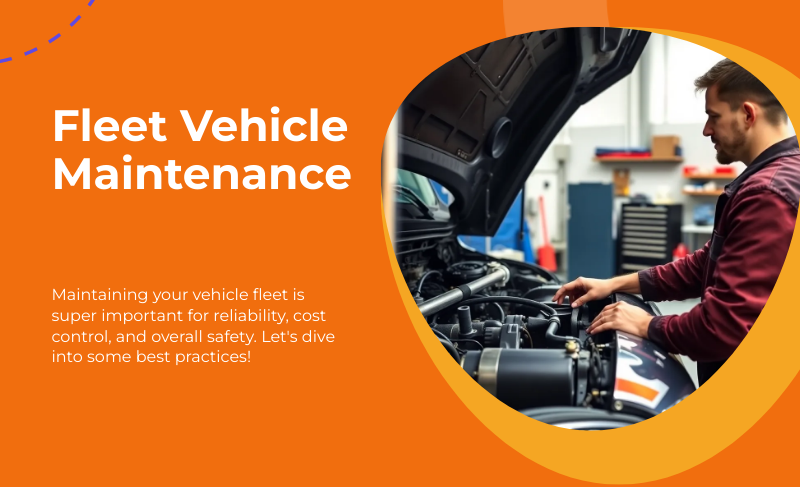
Why Fleet Maintenance Is a Strategic Imperative
Maintaining a fleet is not just a mechanical concern—it’s a bottom-line driver. Poor maintenance leads to:
-
Unexpected breakdowns that disrupt schedules
-
Repair bills that spiral beyond preventive cost estimates
-
Increased liability, safety risks, and regulatory exposure
-
Accelerated depreciation of fleet assets
-
Lower fuel efficiency and higher operating expense
An organized maintenance program is a foundational component of modern fleet operations. Done well, it becomes a differentiator: fewer breakdowns, smoother operations, and more predictable budgets.
Core Elements of a High-Performance Fleet Maintenance Program
Here’s a breakdown of the essential capabilities your maintenance program needs—not as theory, but as operational levers you can measure and improve.
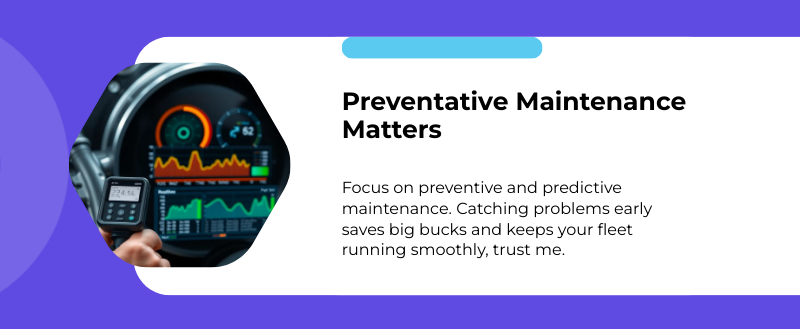
1. Preventive & Predictive Maintenance vs. Reactive
-
Preventive maintenance (PM): Scheduled inspections, oil changes, filter replacement, tire rotations—tasks performed at intervals to prevent failure.
-
Predictive / condition-based maintenance: Using sensor data, fault codes, telematics, and engine diagnostics, you predict when a part will fail and replace it just in time.
-
Reactive maintenance: Repairs after breakdowns—the most expensive path, often involving towing, parts rush, and indirect costs.
A robust program leans heavily on preventive + predictive and treats reactive as a fallback.
2. Standardized Maintenance Schedules and Policies
Every vehicle type, model, and duty cycle should have its own schedule. Your policy must define:
-
Intervals by mileage, engine hours, or time (e.g. months)
-
Task list for each interval (fluids, belts, brakes, filters, lights, etc.)
-
Inspection checklist (suspension, steering, battery, coupling, etc.)
-
Escalation rules (e.g. if a critical fault is found, vehicle must be taken out of service)
Consistency ensures you do not skip essential checks, even during peak workload.
3. Driver & Pre-Trip Inspection Integration
Your frontline defense lies with drivers. Integrate a driver vehicle inspection report (DVIR) into daily operations:
-
Require drivers to record abnormalities (noise, leaks, vibration, warning lights)
-
Use a mobile or electronic system to submit DVIRs in real time
-
Link driver observations with your maintenance system so anomalies generate alerts or work orders
Drivers often see early symptoms before your shop does. Capture that intelligence.
4. Fault Code Monitoring & Telematics Integration
Modern vehicles broadcast diagnostic trouble codes (DTCs) via onboard systems. A good maintenance program will:
-
Integrate telematics or fleet management software that reads fault codes in real time
-
Trigger alerts or work orders when codes appear, even if vehicle is operational
-
Tie diagnostic data to historical maintenance logs, so you spot patterns (e.g. recurring DPF codes, sensor failures)
By reacting early, you avoid cascading damage (for example, a minor sensor fault eventually causing engine damage).
5. Work Order Management & Prioritization
Not all maintenance tasks are equal. You need a system that:
-
Creates, tracks, and closes work orders
-
Prioritizes orders by severity, deadline, or regulatory constraint
-
Routes jobs intelligently to shops or in-house mechanics
-
Captures labor hours, parts cost, and downtime
This visibility turns maintenance into a managed workflow rather than firefighting.
6. Parts Inventory & Supply Chain Strategy
A chronic bottleneck is parts availability. Key approaches:
-
Maintain a core parts inventory (filters, belts, hoses, fasteners) for common failures
-
Use a just-in-time approach for expensive or rarely used items, but track lead time
-
Monitor inventory turnover and write-off expired or obsolete parts
-
Consolidate purchasing to reduce supplier overhead and ensure consistency
When parts are available, repair time drops dramatically.

7. Metrics, Analytics & Lifecycle Costing
Metrics let you govern your program. Key indicators include:
-
Preventive maintenance compliance rate (percentage of scheduled maintenance done on time)
-
Vehicle downtime / utilization (hours or days out of service)
-
Mean time to repair (MTTR) and mean time between failures (MTBF)
-
Repair frequency / cost per vehicle / per mile
-
Parts cost per vehicle
-
Total cost of ownership (TCO): depreciation + fuel + maintenance + downtime
By tracking these over time, you spot underperformers and optimize your cycle of repair vs. replace.
Constructing a Maintenance Checklist: What to Include
Here is a structured checklist you can embed in your daily, weekly, and monthly routines. Tailor to your vehicle fleet (vans, trucks, specialty equipment).
Daily / Pre-Trip Checks
-
Engine oil level
-
Coolant level and leaks
-
Belts, hoses, visible wear
-
Brake fluid + leak check
-
Tire pressure, sidewall damage
-
Lights & signals
-
Windshield wipers / washer fluid
-
Mirrors and glass integrity
-
Fuel level & filler seal
-
Visible exhaust leaks
-
Cab interior: warning lights, gauges, safety devices
Weekly / Minor Inspection
-
Battery terminals & charge level
-
Air filters / cabin filters
-
Transmission fluid (if accessible)
-
Underbody inspection for fluid leaks
-
Check suspension joints / bushings
-
Inspect trailer coupling connections, hoses, wiring
Monthly / Preventive Tasks
-
Oil & filter change (or per schedule)
-
Fuel filter replacement
-
Tire rotation / balancing
-
Brake pad / rotor inspection
-
Alignment & steering check
-
Lubrication of chassis, hinges, joints
-
Inspect belts & replace if signs of wear
-
Cooling system flush or check
-
Inspect exhaust system for leaks or damage
-
Diagnostic scan & code clear
Quarterly / Deep Maintenance
-
Transmission service / fluid replacement
-
Differential & driveline lubrication
-
Inspect and possibly replace hoses, clamps
-
Inspect frame and chassis for rust or damage
-
Inspect heater/AC, HVAC system
-
Suspension, shock absorbers, mounts
-
Inspect fuel injectors, emissions systems
-
Safety equipment and fire suppression system check
Semiannual / Annual
-
Full diagnostic check (all modules)
-
Emissions test (if applicable)
-
Overhaul or rebuild planning
-
Tire replacement thresholds
-
Structural inspection (frame, welds)
-
Regulatory inspections & certifications
-
Review maintenance history to spot emerging patterns
Common Challenges & How to Solve Them
Even well-intentioned programs struggle. Here’s how to troubleshoot:
A. Skipped Maintenance Due to Schedule Pressure
When operations demand a truck today, maintenance often gets deferred.
Solution: Enforce discipline via policy. Dispatch should not load tickets onto trucks past a “draggable” threshold. Use buffer vehicles or rotation so assets can go offline without impact.
B. Poor Communication Between Driver / Shop / Dispatch
Drivers see issues but often don’t communicate them effectively.
Solution: Use digital DVIRs, tie anomalies directly to work orders, and create feedback loops so drivers see the result.
C. Parts Stockouts & Supply Delays
Critical repair gets delayed waiting for parts.
Solution: Use inventory management, slow-moving parts pads, and safety stock. Build relationships with multiple suppliers.
D. Inconsistent Maintenance Quality (across locations or shops)
Different shops apply different standards.
Solution: Standardize service-level checklists, require certifications or audits for third-party shops, and mandate after-service quality checks.
E. Data Siloes & Poor Analytics
Maintenance data lives disconnected (paper logs, shop spreadsheets).
Solution: Deploy centralized fleet maintenance software. Integrate telematics, work orders, inventory, and analytics for a unified view.
Advanced Techniques & Emerging Best Practices
To push your maintenance program from competent to exceptional, adopt more advanced strategies.
1. Sensor-Driven Predictive Maintenance with Routing Alignment
Instead of fixed intervals, use sensor-based models that predict failure windows and schedule maintenance dynamically. The latest research combines these predictions with routing constraints to optimize when and where maintenance occurs—balancing utilization against failure risk.
2. Multi-Objective Scheduling Algorithms
State-of-the-art scheduling applications use evolutionary and optimization algorithms to balance cost, downtime, and maintenance load. They find “sweet-spot” schedules rather than static intervals.
3. Pattern Mining & Predictive Analytics
By analyzing historical maintenance data, you can identify sequences or clusters of failures (e.g. a particular module fails after brake replacement). Use anomaly detection to intervene before the next event.
4. Lifecycle Modeling & Replacement Strategy
Maintenance data guides replacement strategy. If costs begin trending too high for a vehicle or subsystem, you can forecast an optimal “replace-not-repair” threshold.
5. Integration with Route Planning
Seamlessly integrate maintenance windows into routing and dispatch systems. Vehicles approach their maintenance window—dispatch avoids assigning new loads that push them past the threshold.
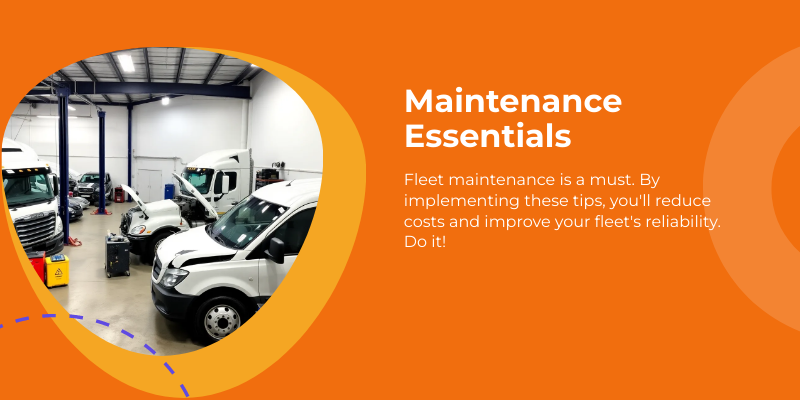
FAQ: Fleet Vehicle Maintenance
1. What Is Fleet Vehicle Maintenance?
Fleet vehicle maintenance is the ongoing process of inspecting, servicing, and repairing company vehicles to keep them safe, reliable, and cost-efficient. It involves scheduled preventive maintenance, condition-based repairs, regulatory inspections, and the management of maintenance records. A robust maintenance plan extends vehicle life, improves uptime, and minimizes costly emergency repairs.
2. Why Is Preventive Maintenance So Important?
Preventive maintenance (PM) keeps small issues from turning into expensive failures. Regular oil changes, brake inspections, and tire rotations prevent engine wear, overheating, and unsafe handling. In fleets, PM is more than mechanical—it’s a data-driven cost strategy. Every dollar invested in preventive maintenance typically saves three to five dollars in future repairs, towing, or lost revenue from downtime.
3. How Often Should Fleet Vehicles Be Serviced?
Service frequency depends on the vehicle type, mileage, and operating conditions.
-
Light-duty commercial vehicles: typically every 5,000–7,500 miles or every 3–6 months.
-
Medium/heavy-duty trucks: often serviced at 10,000–15,000 miles, depending on load cycles.
-
Severe-duty vehicles (construction, urban delivery): may require service every 2,000–3,000 miles due to constant starts, stops, and idling.
Use manufacturer recommendations as a baseline, then tailor your schedule using telematics and diagnostic data to fit actual vehicle usage.
4. What’s the Difference Between Preventive and Predictive Maintenance?
-
Preventive maintenance follows a fixed schedule (e.g., every 10,000 miles).
-
Predictive maintenance uses data—engine sensors, oil analysis, vibration monitoring—to anticipate failures before they happen.
Modern fleets combine both: preventive schedules for general upkeep, predictive analytics for specific component health (for example, DPF filters, fuel injectors, or brake systems).

5. How Do You Create a Fleet Maintenance Plan?
A comprehensive maintenance plan should include:
-
Asset Inventory: List all vehicles with VIN, model, usage, and service intervals.
-
Preventive Schedule: Set mileage or hour-based maintenance tasks.
-
Driver Inspections: Implement pre-trip and post-trip inspection checklists.
-
Repair Procedures: Define escalation levels for minor vs. critical issues.
-
Work Order Process: Track every service job with cost, labor, and parts used.
-
Performance Tracking: Use KPIs like downtime, repair frequency, and PM compliance.
-
Vendor Management: Standardize approved repair shops and parts suppliers.
The goal is predictability—maintenance should never surprise you.
6. How Do Telematics Help with Fleet Maintenance?
Telematics systems monitor real-time vehicle data such as engine diagnostics, fuel efficiency, and driver behavior. They:
-
Send alerts for DTC (Diagnostic Trouble Code) triggers.
-
Track mileage automatically for PM scheduling.
-
Identify inefficient driving patterns (idling, harsh braking).
-
Help forecast component wear.
Integrating telematics into your maintenance system turns raw vehicle data into actionable maintenance insights.
7. What Is a DVIR, and Why Is It Important?
A Driver Vehicle Inspection Report (DVIR) is a mandatory pre- and post-trip inspection record for commercial drivers. It ensures vehicles are roadworthy before operation and documents any defects discovered during the day.
Benefits include:
-
Early detection of safety issues (brakes, tires, lights).
-
Compliance with DOT and FMCSA regulations.
-
Reduced breakdown risk through faster repair escalation.
Digital DVIRs can sync with fleet software, ensuring issues create automatic work orders.
8. What Are the Most Common Causes of Fleet Breakdowns?
The most frequent culprits include:
-
Worn or underinflated tires.
-
Low or contaminated oil.
-
Faulty batteries or alternators.
-
Brake wear and fluid leaks.
-
Cooling system failures (hoses, water pumps).
-
Electrical system malfunctions (sensor faults, lighting).
Nearly 60% of unplanned breakdowns trace back to deferred maintenance or overlooked warning signs.
9. How Can Fleet Managers Reduce Downtime?
Downtime reduction starts with planning and automation.
-
Maintain high preventive maintenance compliance.
-
Schedule service during off-hours or rotation gaps.
-
Keep spare vehicles for critical routes.
-
Use real-time diagnostics to address faults before failure.
-
Build vendor partnerships for guaranteed service turnaround times.
Tracking downtime hours by vehicle type and cause helps you pinpoint systemic weaknesses.
10. Should Fleets Outsource or Keep Maintenance In-House?
It depends on your scale and operational footprint.
-
In-house maintenance offers faster turnaround and control but requires staff, tools, and facility investment.
-
Outsourced maintenance provides predictable costs and professional oversight, but less scheduling flexibility.
Many mid-sized fleets use a hybrid model—outsourcing major repairs while handling preventive service internally.
11. How Do You Control Fleet Maintenance Costs?
Cost control relies on visibility. To keep expenses in check:
-
Track cost per mile for each vehicle.
-
Use bulk purchasing for fluids and filters.
-
Standardize equipment to reduce parts variety.
-
Enforce preventive maintenance compliance above 90%.
-
Replace vehicles when maintenance costs exceed 50% of depreciation-adjusted value.
-
Leverage data to detect high-cost trends (e.g., recurring repairs by model or driver).
12. How Do You Decide When to Replace a Fleet Vehicle?
Replacement decisions combine both quantitative and operational triggers.
-
Age or mileage thresholds: 7 years / 150,000 miles for light-duty, 10 years / 500,000+ miles for heavy-duty.
-
Maintenance cost ratio: When repair costs exceed 30–50% of replacement cost.
-
Downtime ratio: Frequent breakdowns or unavailable days justify replacement.
-
Fuel efficiency loss: If degraded MPG erodes profitability.
Fleet lifecycle analysis should be updated annually to guide capital planning.
13. What Metrics Should a Fleet Maintenance Dashboard Track?
A well-designed dashboard tracks:
-
Preventive maintenance completion rate
-
Average repair cost per mile
-
Mean time between failures (MTBF)
-
Mean time to repair (MTTR)
-
Vehicle availability rate
-
Parts spend per asset
-
Warranty recovery rate
-
Breakdown frequency by category
These metrics help quantify the efficiency and predictability of your maintenance program.
14. How Do Regulations Impact Fleet Maintenance?
Fleet maintenance isn’t just a best practice—it’s a compliance requirement.
Federal and state agencies (like FMCSA) require systematic maintenance, recordkeeping, and periodic inspections. Noncompliance can lead to:
-
Vehicle out-of-service orders
-
Penalties or fines
-
Damaged CSA safety scores
-
Insurance premium increases
Maintaining up-to-date records for every service, inspection, and DVIR submission is both a legal and operational necessity.
15. What Role Does Driver Behavior Play in Maintenance Costs?
Driving habits directly affect wear and tear.
-
Harsh acceleration and braking increase brake and tire costs.
-
Excessive idling causes carbon buildup and engine strain.
-
Overloading accelerates suspension and transmission wear.
Driver scorecards and coaching can lower maintenance costs by as much as 15–20%.
16. How Can Software Improve Maintenance Operations?
Fleet maintenance software centralizes data, automates scheduling, and enables data-driven decisions. Benefits include:
-
Automated PM scheduling by mileage or hours.
-
Digital work orders and repair logs.
-
Cost tracking by asset and location.
-
Inventory control and parts reordering.
-
Custom analytics dashboards.
Modern platforms also integrate with GPS, telematics, and accounting systems for seamless oversight.
17. What’s the Ideal Maintenance Budget per Vehicle?
Budget targets vary by vehicle type and age:
-
Light-duty commercial: $0.06–$0.10 per mile.
-
Medium/heavy-duty: $0.12–$0.25 per mile.
Older vehicles exceed these ranges as they near replacement age. Tracking total cost of ownership (TCO) ensures accurate forecasting.
18. How Can Fleets Handle Seasonal Maintenance?
Seasonal changes introduce unique challenges.
-
Winter: Check battery capacity, tire tread, and coolant levels; install snow chains or winter tires as required by state law.
-
Summer: Inspect AC systems, cooling systems, and tire pressure; prevent overheating.
-
Rainy regions: Verify wipers, lights, and defrosters.
Adjust preventive schedules around seasonal demands to reduce climate-related failures.
19. How Do You Train Drivers for Maintenance Awareness?
Training should emphasize early detection and reporting.
-
Conduct hands-on walk-around inspections.
-
Teach drivers how to identify early failure indicators.
-
Reinforce daily DVIR completion.
-
Use feedback loops: show drivers how their reports prevent breakdowns.
Empowered drivers become the first line of maintenance prevention.
20. What’s Next for Fleet Maintenance in 2025 and Beyond?
The next wave of fleet maintenance will rely on data, automation, and sustainability. Expect:
-
Expanded use of AI for predictive diagnostics.
-
Wider adoption of electric vehicles (EVs) requiring software-based maintenance tracking.
-
Automated fault detection using onboard sensors and IoT devices.
-
Carbon and emissions tracking as part of maintenance reporting.
Future-ready fleets will merge operational efficiency with environmental accountability.